Choosing modern memory is no longer about buying the largest number on the box. For many desktop buyers, DDR5 frequency affects responsiveness, bandwidth, and platform value. The High frequency DDR5 benefits become clearer when matched with a capable processor, motherboard, and suitable workload. A faster kit may help gaming systems maintain smoother frame delivery during demanding scenes. It can also support heavy multitasking, large creative projects, and frequent data transfers. However, specifications alone do not guarantee a noticeable improvement. Latency, capacity, memory channels, and system tuning still matter.
This guide examines five practical advantages for buyers considering high-frequency DDR5 memory. Each benefit is connected to everyday use, from launching applications to handling several browser tabs and editing high-resolution media. Testing results should be interpreted carefully, because performance varies between processors and applications. A kit rated at 7200 MT/s may impress on paper, yet a lower-rated kit could offer better stability or value. That assumption can fail. Compatibility deserves attention before purchase. Check the motherboard’s memory support list, required voltage, and processor limitations. Some systems may need updated firmware or manual adjustments to reach advertised speeds. Real experience often reveals small trade-offs, including longer memory training or occasional instability. Those details are easy to overlook. Reliable buying advice must acknowledge them. By comparing bandwidth, responsiveness, upgrade flexibility, energy considerations, and real-world value, this overview helps buyers make a measured decision rather than chase frequency alone.
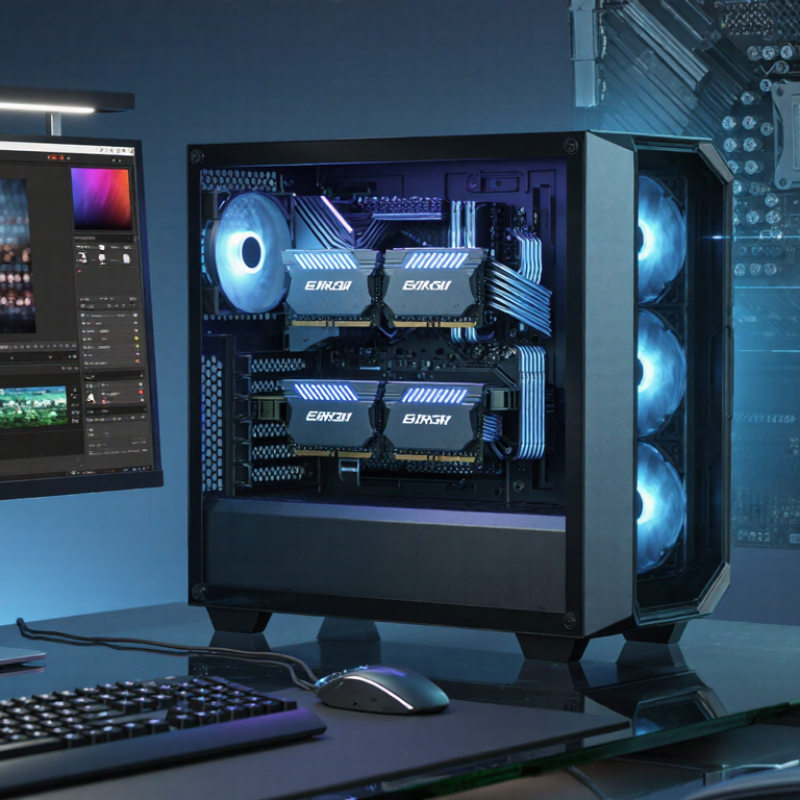
5 Best High Frequency DDR5 Benefits for Buyers
What High-Frequency DDR5 Means for Today’s Buyers
High-frequency DDR5 memory moves more data each second than slower modules. This can improve frame rates, application response, and file-handling speed. The difference becomes clearer when the processor and graphics card can use the extra bandwidth. I have seen smoother multitasking when browsers, editing software, and background services run together. However, frequency alone does not guarantee better performance. Memory timings, capacity, processor support, and motherboard settings also matter.
For buyers, the practical benefits include faster data transfer, improved productivity, better gaming consistency, and more room for demanding software. High-frequency kits may help modern processors avoid memory bottlenecks. They can also support larger projects, such as high-resolution video timelines or complex 3D scenes. Still, the gains vary widely. Some everyday tasks barely change. Paying for extreme speeds can be wasteful if the system cannot run them reliably. That part is easy to overlook.
Tips: Check the motherboard’s supported memory speed first. Choose enough capacity before chasing maximum frequency. Confirm that two matching modules are supported. Enable the rated memory profile only after checking system stability. Run a memory test after installation. If crashes appear, reduce the speed slightly. Real-world reliability beats impressive specifications. I sometimes prefer a modest setting that works daily, though that is not the most exciting choice.
| Benefit | Relevant Data | What It Means for Buyers | Important Buying Consideration |
|---|---|---|---|
| 1 Higher Memory Bandwidth | DDR5-4800 provides approximately 38.4 GB/s of theoretical bandwidth per 64-bit memory channel. DDR5-6000 increases this to approximately 48.0 GB/s, while DDR5-7200 reaches approximately 57.6 GB/s. | More bandwidth can help data-intensive workloads move information between the processor and memory more efficiently, especially in content creation, compression, simulation, and some gaming workloads. | These are theoretical peak figures calculated from data rate × 8 bytes. Real-world performance depends on the processor, motherboard, memory timings, workload, and software optimization. |
| 2 Better Integrated-Graphics Performance | Integrated graphics use system memory as video memory. Higher data rates can provide more shared memory bandwidth than lower-frequency DDR5 configurations. | Buyers using integrated graphics may see smoother gameplay, faster texture access, and better performance in graphics workloads that are limited by memory bandwidth. | The improvement varies substantially by application and graphics architecture. A discrete graphics card usually reduces the importance of system-memory speed for GPU-limited gaming. |
| 3 Lower Access Latency at Comparable Timings | True first-word latency can be estimated with the formula: CAS latency × 2000 ÷ data rate. For example, DDR5-4800 CL40 is approximately 16.7 ns, while DDR5-6000 CL36 is approximately 12.0 ns. | A well-balanced high-frequency kit can reduce memory access time while also increasing bandwidth, which may benefit latency-sensitive applications and some games. | Frequency alone does not determine responsiveness. Compare both data rate and timings, and avoid paying a large premium for a small latency advantage. |
| 4 More Headroom for Multitasking | DDR5 modules are commonly available in capacities such as 16 GB, 24 GB, 32 GB, and 48 GB per module, depending on the platform and module design. | A higher-capacity, high-speed configuration can support demanding combinations such as gaming, live streaming, browser tabs, virtual machines, and creative applications with less reliance on slower storage-based paging. | Capacity often matters more than frequency once a system begins running out of memory. For many mainstream systems, 32 GB is a practical starting point, while heavier workloads may justify 64 GB or more. |
| 5 Longer Useful Performance Life | Moving from DDR5-4800 to DDR5-6000 increases theoretical single-channel bandwidth by approximately 25%. In a two-channel configuration, theoretical bandwidth is approximately 96.0 GB/s at DDR5-6000. | Additional bandwidth can provide useful performance headroom as applications, games, operating systems, and background services become more demanding over time. | High-frequency memory is worthwhile only when the platform supports it reliably. Check the processor memory specification, motherboard support list, module capacity, firmware version, and the required memory profile before purchase. |
Data rates are expressed in MT/s rather than MHz because DDR memory transfers data twice per clock cycle. The bandwidth figures shown are theoretical maximums for a 64-bit channel and do not represent guaranteed application performance.
It moves more data each second than slower memory. This can improve responsiveness, frame rates, and large-file handling. Frequency is not everything.
Benefits appear during video editing, 3D rendering, compression, and demanding games. Large project files may open more smoothly. Everyday browsing may change very little.
It can reduce pauses when many applications run together. For example, twenty browser tabs, music, spreadsheets, and editing software may feel steadier. Capacity still matters.
Not always. A slightly slower 32GB kit may outperform a faster 16GB kit during heavy multitasking. Capacity comes first.
Check the motherboard and processor memory-speed support. Confirm that two matching modules are supported. Also check cooling clearance and firmware compatibility.
Yes, timings affect practical responsiveness. A higher frequency may come with looser timings. Compare both specifications, not frequency alone.
Enable the rated memory profile in firmware after installation. Then run a memory test for several hours. Test after installation.
Reduce the memory speed slightly and test again. Check temperatures and system stability afterward. Reliability beats impressive numbers.
Measure frame rates, export times, loading behavior, or compilation times. Packaging claims cannot predict every workload. I once chased frequency and overlooked capacity. That surprised me.
High frequency DDR5 benefits are becoming increasingly important for buyers who want stronger performance and longer system usability. By operating at faster memory speeds, high-frequency DDR5 can provide greater memory bandwidth, allowing data to move more quickly between the processor and memory. This can help improve responsiveness in modern games, content creation software, rendering tasks, and other applications that depend on fast data access.
For users who frequently run multiple programs or handle demanding workloads, high-frequency DDR5 may deliver smoother multitasking and more consistent performance. It can also support future upgrades by giving a system additional memory headroom as software and applications become more demanding. While the real-world improvement depends on the overall hardware configuration and workload, choosing suitable high-frequency DDR5 can be a practical way for buyers to build a faster, more responsive, and more future-ready computer.

 Cynovex